AI and automation are often discussed as if they were the same thing. They are related, but a firm choosing between them—or deciding to use neither—should understand the difference.
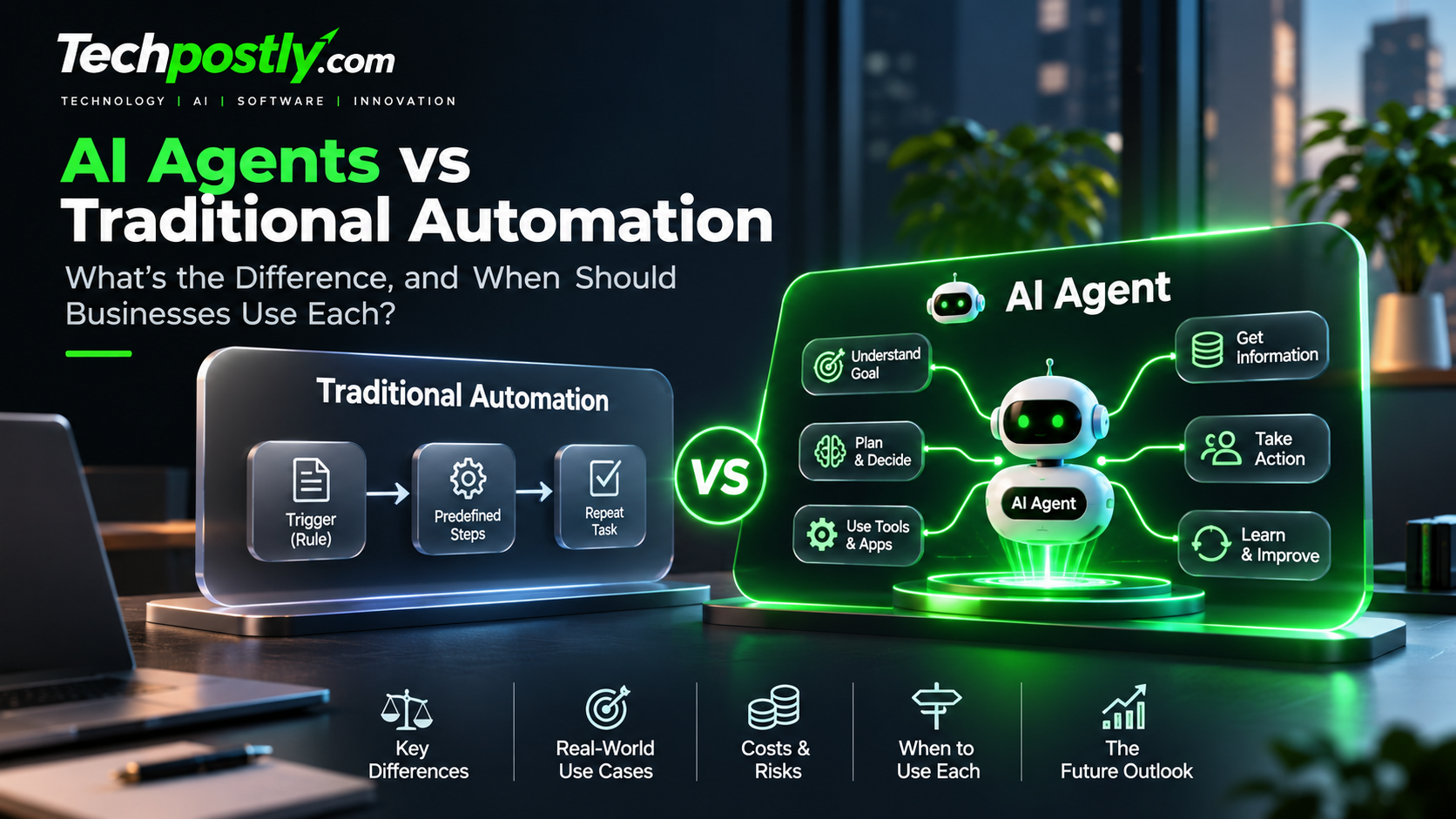
Automation follows defined rules to move information or trigger an action. Artificial intelligence describes methods that can recognize patterns, generate content, or make predictions from data. Some workflows combine both: AI may prepare or classify information, while automation routes it to a person for review.
Start with the business problem
Useful questions include:
- Is work delayed by repetitive data entry or handoffs?
- Do professionals spend too much time searching for approved knowledge?
- Are routine documents assembled inconsistently?
- Is a recurring analysis difficult because the inputs are scattered?
- What quality, confidentiality, or client experience problem needs attention?
A technology does not create value merely by being new. Connect the problem to a specific task, the person who performs it, and the decision or service outcome it supports.
Understand the workflow
Map what happens today: the input, steps, systems, decisions, review, and final output. Identify variations and exceptions. This often reveals that the first improvement is a clearer template, a shared source of truth, or better ownership—not an AI model.
For example, client onboarding may include collecting information, checking it for completeness, assigning an owner, and updating internal records. A form and deterministic workflow may address missing fields and notifications. AI might help classify unstructured documents, but that output should be checked and should not silently approve a client or make a risk decision.
Match the technology to the task
Use rules-based automation when inputs and actions are predictable. Consider AI when a task involves language, patterns, or a large body of information that people currently review. Keep a human decision-maker where context, professional judgment, or accountability matters.
The distinction is not always absolute. What matters is that the firm can explain what the system does, what information it handles, how a person checks the result, and what happens when it fails.
Plan adoption and measure impact
Successful implementation requires more than configuring a tool. Teams need approved data boundaries, training, clear responsibilities, a support route, and a manual fallback. Clients may need to be informed or involved depending on the service and applicable commitments.
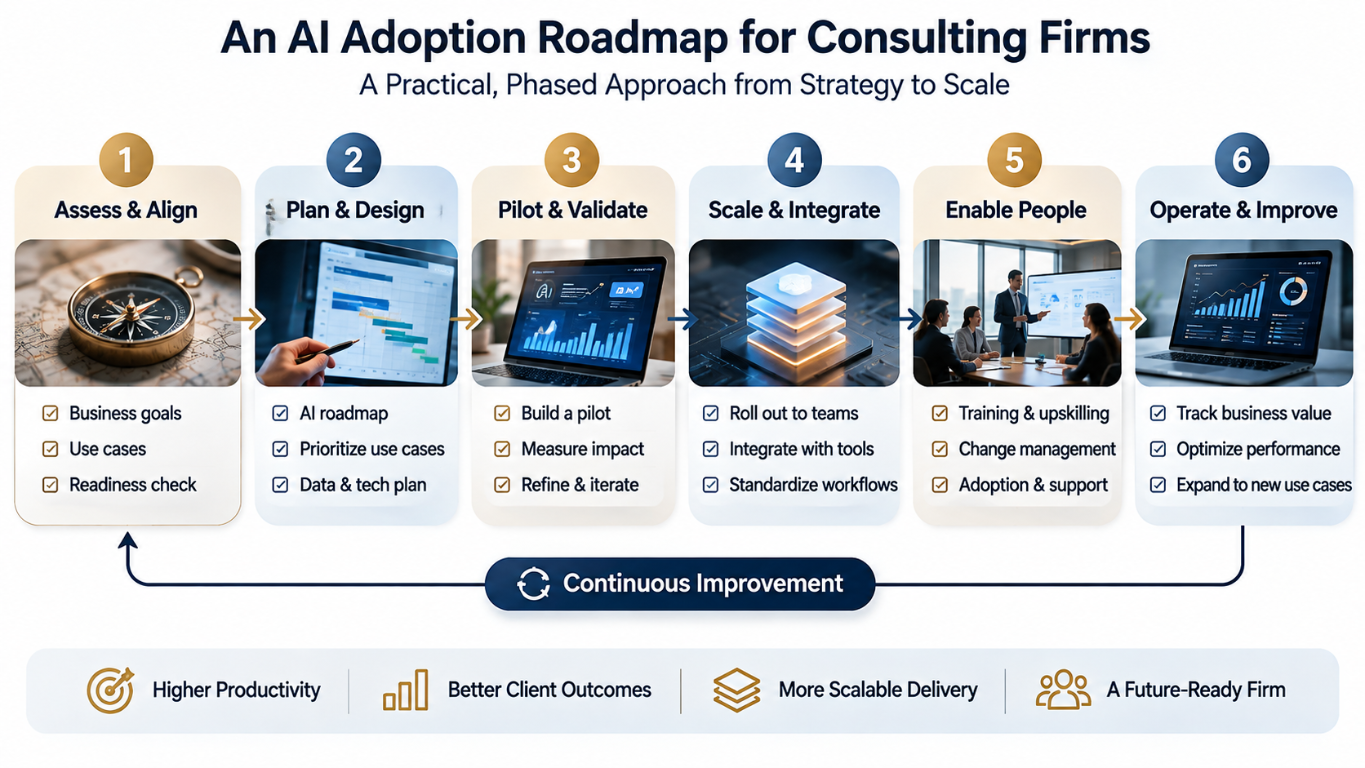
Set a baseline before changing the workflow. Measure time, review effort, quality, errors, and exceptions. Report observed improvements separately from potential savings or future revenue. See the AI adoption roadmap for consulting firms for a practical pilot sequence.
A repeatable evaluation checklist
- Define the service or operations problem.
- Map the existing workflow and its exceptions.
- Identify the information and permissions involved.
- Decide whether rules, AI, a process change, or a combination fits.
- Name the accountable owner and reviewer.
- Test a representative sample against a baseline.
- Continue, revise, or stop based on evidence.
This approach applies across consulting, accounting, legal, IT services, marketing, engineering, recruitment, and advisory firms. The details differ by industry, but the principle is constant: technology should improve a real workflow without obscuring responsibility.